Does my child have lazy eye? 7 Subtle Signs of a Lazy Eye Parents Often Miss
How to recognise amblyopia in children - key warning signs
Gergana Svetoslavova
1/21/20265 min read


Does my child have lazy eye? 7 Subtle Signs of a Lazy Eye Parents Often Miss
As parents, one of our most important role is to watch over our young ones. We are there for the first steps, for the first tooth, for the first word. We notice every new scratch, every new mole, all the nights with a fever or a cough. But when it comes to our kids sight, some of the most important things to see, actually stay hidden.
Many of us grew up thinking a "lazy eye" was something obvious—an eye that clearly wandered or crossed or wasn’t with normal color of the pupil. But often, amblyopia (the medical term for a lazy eye) is a silent diagnose and the eye looks perfectly normal.
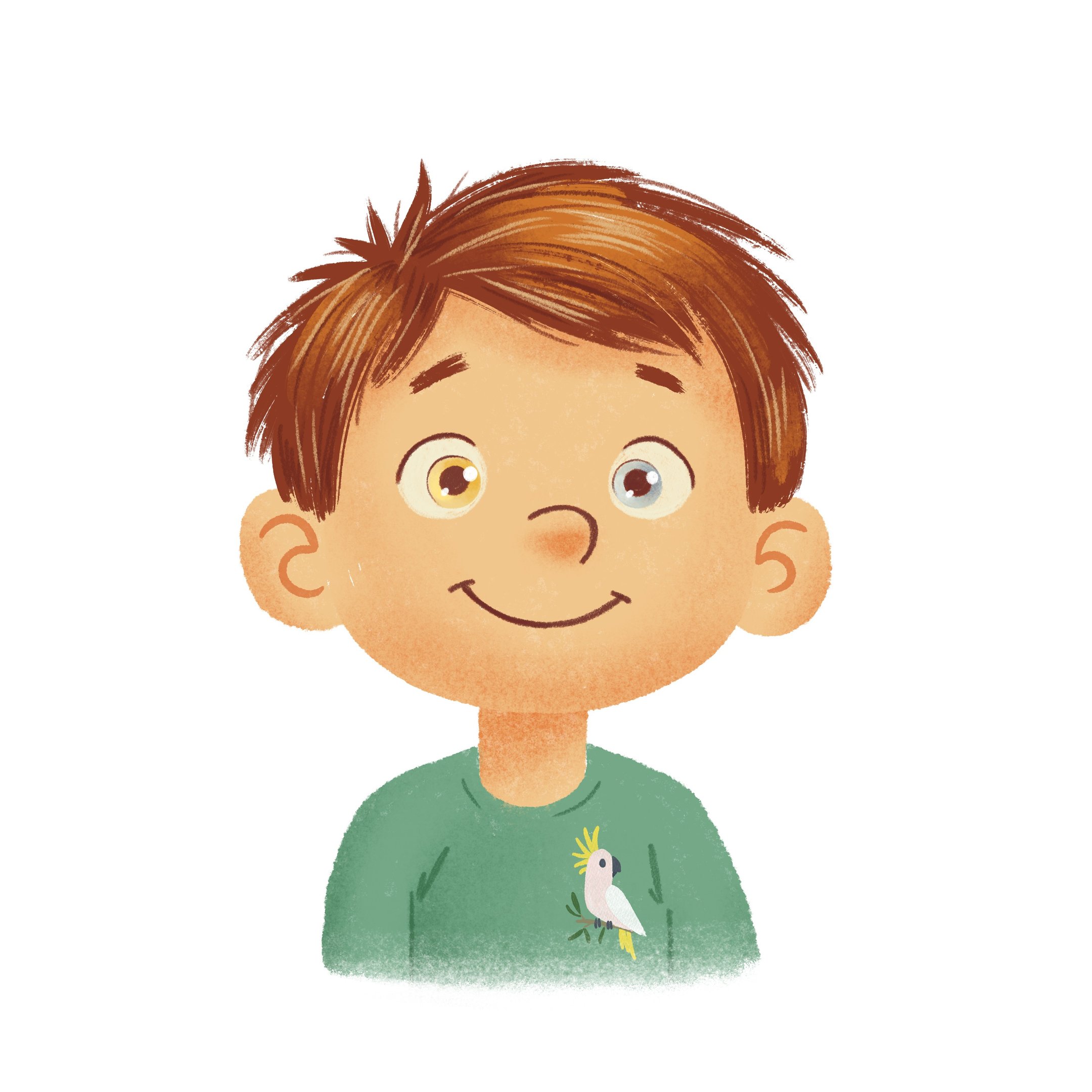
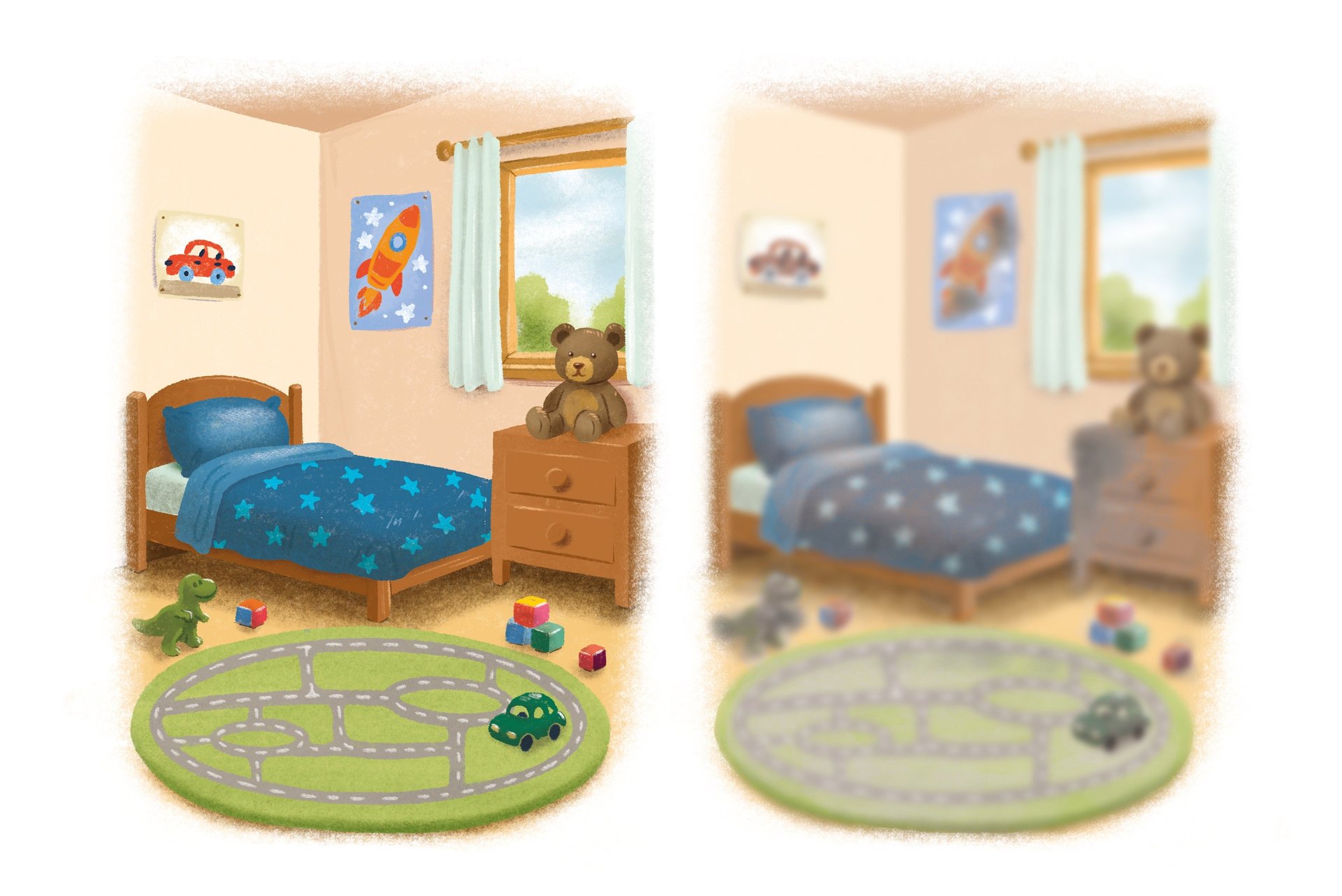
In ‘My Magic Eyes’ Finn’s eyes are different, because I wanted to use the power of the metaphor. The gray eye is the one that sees less colours, no distinct picture, while the golden eye is the eye that Finn’s brain favours, the one that he uses to do everything. In reality, things are not so obviously written in our kids eyes. Most often they can look normal and the same, but the fact that they are different is there.
How to understand does your child have a ‘lazy eye’?
The obvious answer is to take him on his regular check ups for paediatric visual screening - in the first year of their life, then on the third and then when he is around six years of age. That way in the different periods of his life the eye care specialists can check at the appropriate time for every milestone that is expected at the specific age of the child.
But also there might be some amblyopia symptoms that would suggest that your child has ‘lazy eye’.
One of them is being, for instance, clumsy. If your child is frequently tripping, or often bumps into objects, or has difficulty catching a ball or coordinating his movements in sports, well that might be because he is struggling with his stereo vision or lack of one and has a problem with depth perception. When the two eyes do not work together, the child sees the world a bit flat, not in 3D. This means they have disrupted depth perception.
For that particular reason in our training book ‘My Magic Eyes - games and exercises’ I included ideas such as searching for a treasure in the kinetic sand, or the game with the magnetic fishing rod.
Another lazy eye sign in toddlers might be the “head tilt” tactic. If you have noticed that whenever your child wants to see something in the distance better he turns his eyes or head in a specific way, for instance when they are watching TV, then that might be your clue. This is a way to constantly use the stronger eye and align their vision to see more clearly with it, while not using the lazy eye.
Other frequent sign of lazy eye is squinting or closing one eye when they go outside in the sun, or sensitivity to bright light. That is because when the light is bright focusing with both eyes is even harder and if there is even a little squint, it becomes much more harder to compensate it. Then the brain favours one of the eyes and the other is closed to eliminate the “double vision” caused by bright light. That is a symptom not only of a possible lazy eye, but also and mainly of undiagnosed latent strabismus.
Very often there is “reading” fatigue. The child would rub his eyes often when trying to read or draw or write. They probably easily lose focus. Drawing or colouring in is not their strongest asset. The reason for that is that doing those things with a ‘lazy eye’ is very hard. The child is not bored or stubborn, he simply is working double-time to process the tasks and cannot do it for a longer period of time.
Another way to check for lazy eye would be the ‘portrait’ test. Check your phone for old photos of your child where the camera flash was used. You should be looking for the red reflex in the eye. If there is red reflex, then the eye is centred. This should be seen in both eyes. If it is seen in one eye, but not in the other, you might want to check your child’s vision and orthoptic status.
A different aspect of amblyopia is the poor fine motor skills. Usually, due to the lack of stereo vision, children with lazy eye are having difficulty with tasks like threading beads or staying inside the lines when colouring. Or the “Color sorting” game that we included in our training book ‘My Magic Eyes - games and exercises’. These tasks require high-level coordination between the eyes and the hands and this is difficult when having on lazy eye, or trouble focusing.
The Last but very important sign is the “cover” reaction. If you cover your kids’ eye with your hand for instance and he starts to protest that would show that the child heavily relies on that particular eye. This check up can be done from early age and is good to check how the child reacts to covering one eye and then the other. If there is big difference between the reaction to covering the left and then the right eye, that is your sign to have your kid’s eyes checked.
What to do if you notice any of these signs?
As previously said, there should be done regular check ups on your young one’s vision - at the age of 1, 3 and 6 years. But If, for some reason, you have missed those vision screenings, it is never too late to have their eyes checked. As for the diagnose “lazy eye” - it is never too late to start treatment, but the sooner, the better! That is because the younger the brain is, the more plastic it is and responds easier to treatment. Thus, if you start early, the results would be better.
When you see any of those signs, even if at some point your child has passed a vision screening test, make an appointment with a paediatric ophthalmologist.
And while you wait for your appointment, your most useful step would be to start conversations with your child on that topic. You can prepare him with some examples or a small talk about what happens when you go to an eye doctor. Also, a good idea is to show him some stories about that, like our book ‘My Magic Eyes’ which can be a good example that having an eye condition that needs to be treated with glasses or an eye patch, doesn’t stop you from having the time of your life with your best friend!
Good Luck!
Контакти
Свържете се с нас за записване на час или въпроси
ЕЛЕКТРОННА ПОЩА
© 2025. All rights reserved.
Абонирай се
Book your appointment